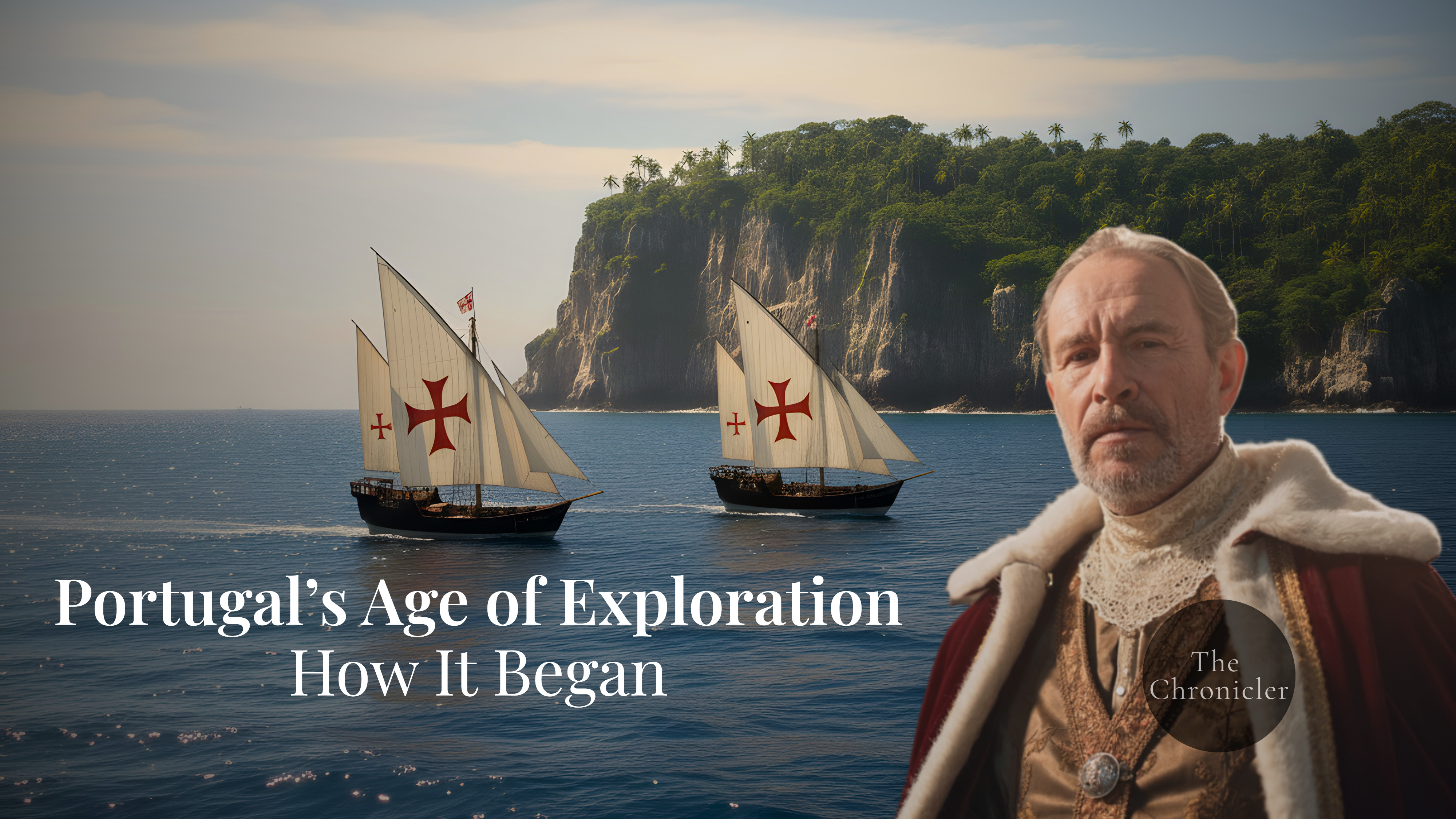
They were sailing to India. They found Brazil instead.
In March 1500, Pedro Álvares Cabral led thirteen ships out of Lisbon — the largest fleet Portugal had ever assembled. Their mission: secure the spice route Vasco da Gama had opened. But the winds had other plans.
Historical Background
Following Da Gama’s successful return from India, King Manuel I wasted no time. He assembled a massive fleet under Pedro Álvares Cabral — thirteen ships carrying 1,500 men, including soldiers, merchants, priests, and some of Portugal’s most experienced navigators. Bartolomeu Dias himself captained one of the vessels.
Blown Off Course
Cabral’s fleet followed Da Gama’s wide Atlantic arc to catch favorable winds around the Cape of Good Hope. But the fleet swung farther west than intended. On April 22, 1500, lookouts spotted a large mountain on the horizon — Monte Pascoal, on the coast of what is now Bahia, Brazil.
Terra de Vera Cruz
Cabral made landfall on a coastline no European knew existed. He named it Terra de Vera Cruz — the Land of the True Cross. The fleet anchored and spent ten days exploring the coast, trading with the indigenous Tupiniquim people, and celebrating a Catholic mass on the beach — the first recorded Christian ceremony in the Americas south of the Caribbean.
The Tupiniquim Encounter
The Portuguese described the Tupiniquim as curious and welcoming. Pero Vaz de Caminha, the fleet’s scribe, wrote a detailed letter to King Manuel — one of the most important documents in Brazilian history — describing the land, its people, and its potential. The letter portrayed a lush, fertile territory ripe for colonization.
Strategic Calculation or Accident?
Historians still debate whether Cabral’s landfall was truly accidental or a calculated maneuver. The Treaty of Tordesillas (1494) had divided the undiscovered world between Portugal and Spain along a meridian in the Atlantic. Brazil fell within Portugal’s sphere — conveniently. Some scholars believe Portugal already suspected land existed west of the treaty line and used Cabral’s voyage to claim it formally.
A Cross on the Beach
Before departing for India, Cabral planted a large wooden cross on the shore and formally claimed the territory for Portugal. This single act set in motion the colonization of Brazil — a process that would transform South America, displace millions of indigenous people, and create one of the largest nations in the modern world.